
Asou Kamal has written an article entitled “New Communism.” The original version of this article was written in Kurdish and has recently been translated into English.
The central thrust of Asou Kamal’s return to this subject is a critique of Bolshevism. He argues that one of the principal causes of the deviations associated with Bolshevism was that, in the October Revolution, it was the Party—not the working class—that seized political power. According to him, this very deviation laid the foundations for personal dictatorship and the cult of personality.
He further extends this reassessment to the Worker-Communist movement, maintaining that the same logic also characterized Mansoor Hekmat’s conception of Worker Communism. In his view, this resulted in the emergence of a cult of personality and the exclusion of the working class from the strategy for the conquest of political power.
None of these criticisms, however, actually constitutes an examination of “New Communism.” Rather, Asou Kamal’s return to this familiar line of argument is itself accompanied by striking and revealing contradictions.
It appears that he has felt compelled to devise a justification for distancing himself from the tradition of Worker Communism—one capable of reconciling him with his own conscience. Whether consciously or unconsciously, he wishes to convey to his readers that he entered the communist movement by mistake and spent several years under an illusion.
From this standpoint, his article is far less a serious critique of Bolshevism, Leninism, or Worker Communism than it is an account of years squandered and opportunities lost.
There was no need for him to leave his readers with the impression that a profound theoretical reconsideration lay behind his departure.
I shall merely draw attention to several of his criticisms, while pointing out that the issues to which he refers had already been raised and subjected to rigorous Marxist examination many years before his withdrawal—and, significantly, by Mansoor Hekmat himself.
When Asou Kamal joined the Worker-Communist Party of Iraq, more than a decade had already elapsed since a socialist critique of the causes underlying the defeat of the October Revolution had been formulated in opposition to the conventional democratic explanations of that historical experience.
It is reasonable to assume that, at least during that period, Asou Kamal was well aware that such critical analyses within the Worker-Communist movement were grounded in a substantial body of documents, theoretical debates, and living political polemics.
He is equally aware that the dissemination of this literature throughout Iraq—and the translation of many of these works into Kurdish—constituted one of the principal foundations for the rise of the Worker-Communist movement in Iraq. Indeed, it was within this political and theoretical environment that individuals such as himself first emerged and gained recognition as political figures.
For the benefit of readers, and because Asou Kamal effectively sets these historical documents aside in favour of familiar democratic criticisms of the failure of the October Revolution, I shall refer here to a number of those works:
A second issue that places Asou Kamal’s claim to have developed a “New Communism” in serious difficulty concerns precisely the relationship between the Party and political power.
Within the Worker-Communist Party, roughly coinciding with the emergence of the Second of Khordad movement in Iran, a number of members rebelled against the Party and initiated a wave of resignations. These individuals represented precisely the same Menshevik tradition: they believed that the historical process itself—symbolized by the rise of the Second of Khordad movement—had rendered conscious revolutionary intervention unnecessary.
Yet these politically inexperienced adventurers fundamentally misread the situation.
They justified their support for the Second of Khordad movement by arguing that Mansoor Hekmat had removed the working class from the strategy for the conquest of political power, and that, by doing so, he had merely repeated the mistakes committed by Lenin and the Bolsheviks.
Only one question remains for me:
What movement of the bourgeoisie or the petty bourgeoisie has, on this occasion, activated Asou Kamal’s Menshevism?
In my view, Asou Kamal would have retained far greater intellectual and political credibility had he refrained from embarking upon the same road that led both the Mensheviks of the October Revolution and the advocates of the Second of Khordad within the Worker-Communist movement to such a lamentable conclusion.
To seek consolation among the familiar circles of democratic critics of the October Revolution; to condemn the communist party’s assumption of political power; to denounce the Leninist method, the cult of personality, and the dictatorship of both the Party and the individual—such positions may perhaps provide a measure of personal comfort and emotional relief.
In the real world, however—in the arena of historical struggle—they evoke precisely the same absurd image that Don Quixote bequeathed to both the old and the new Mensheviks.
For Asou Kamal, as he confronts this political as well as personal decline, I can only wish him patience, fortitude, and dignity. But, his new menshevism makes him fragile in this Dangerous fall!!
This outcome was avoidable dear Asou. Due to those time I liked Asou kamal for the same cause we were close comrades; I´m deeply saddened to se him departing left and socialism and choose right and liberalism. I miss “old” Asou Kamal not him with his “new” anti socialist choice.
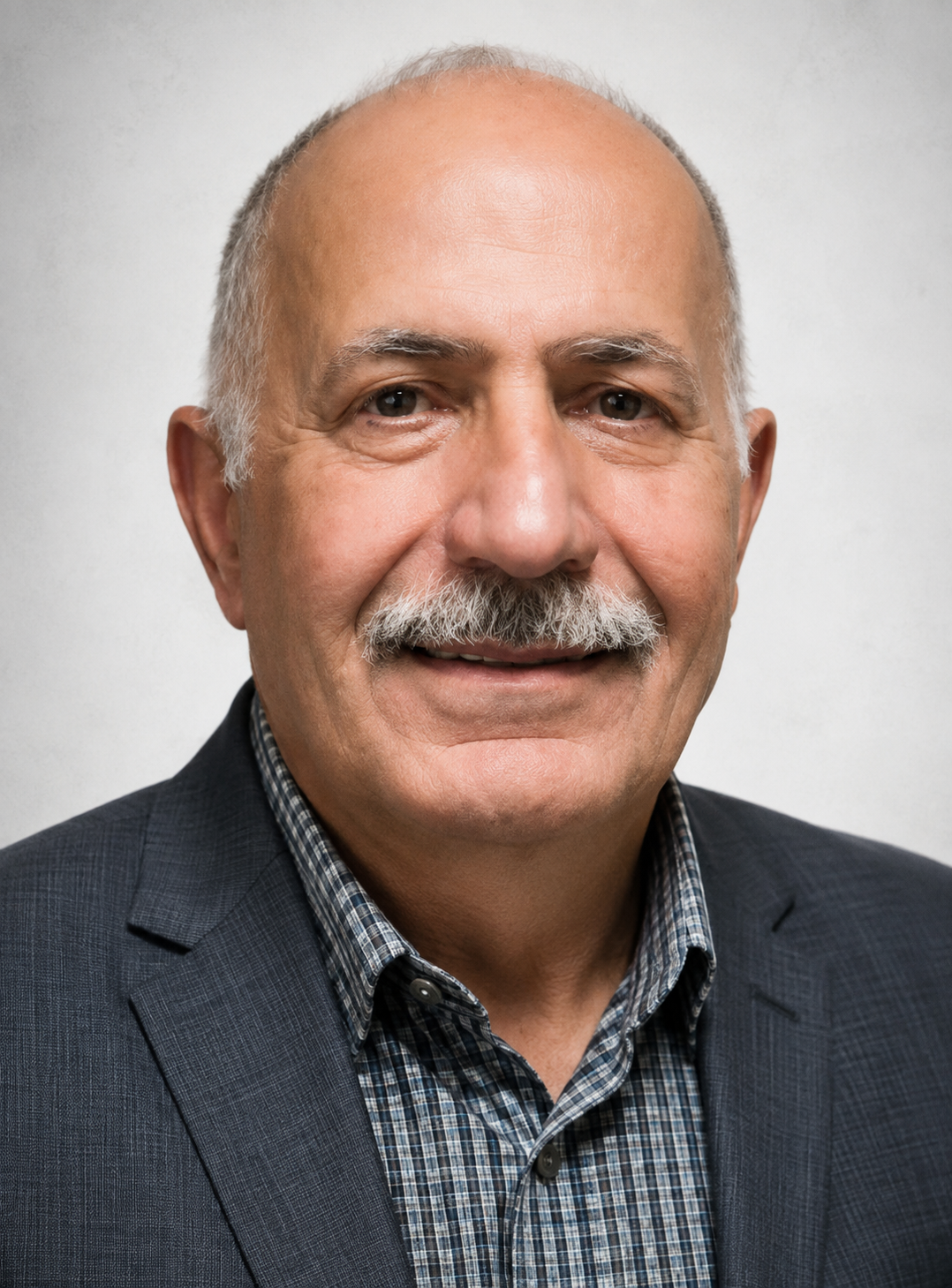
My heart ached for this Aso Kamal in the attached photo, when, together with other loved ones, we wanted to capture and record our love and sincerity in following the path of the Bolsheviks and Mansour Hekmat.

Iraj Farzad July 2026
Posted in: ایرج فرزاد



» Leave a Reply